ISPN online education courses

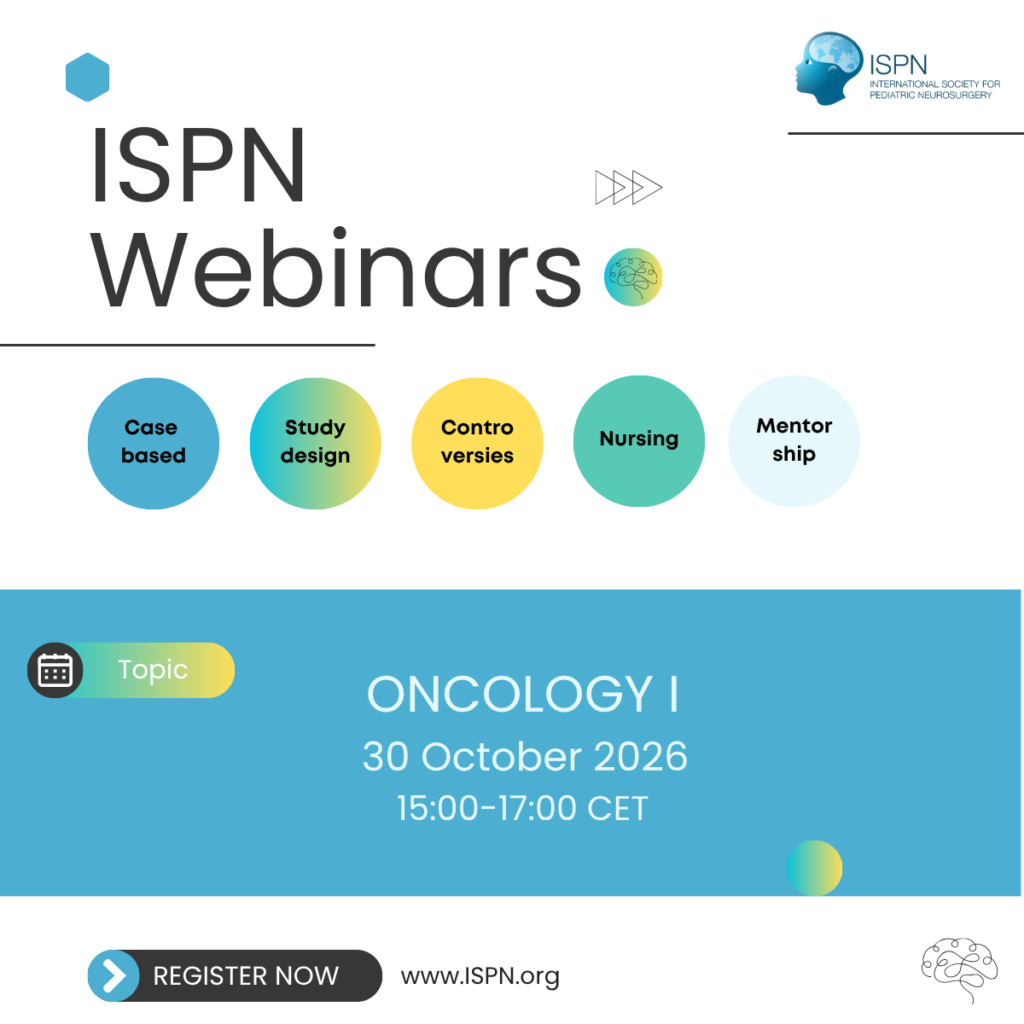
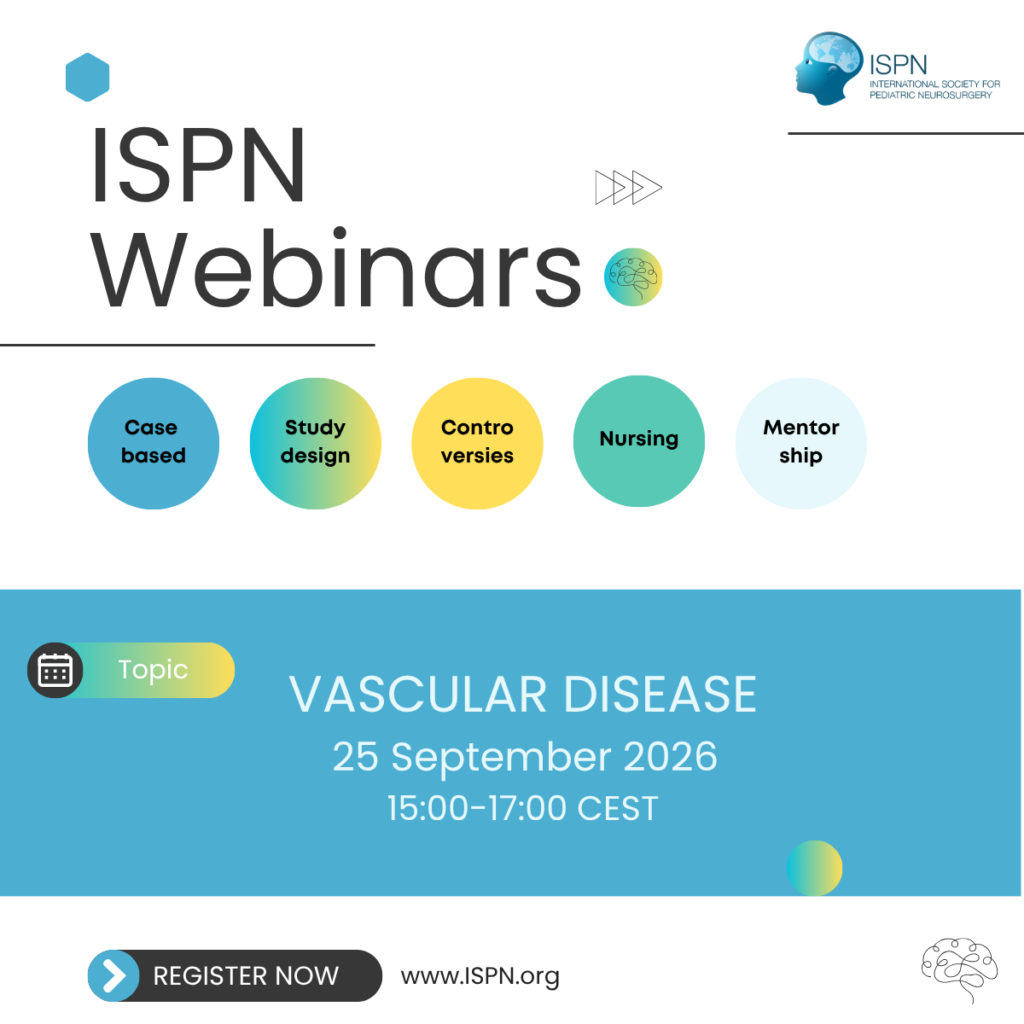
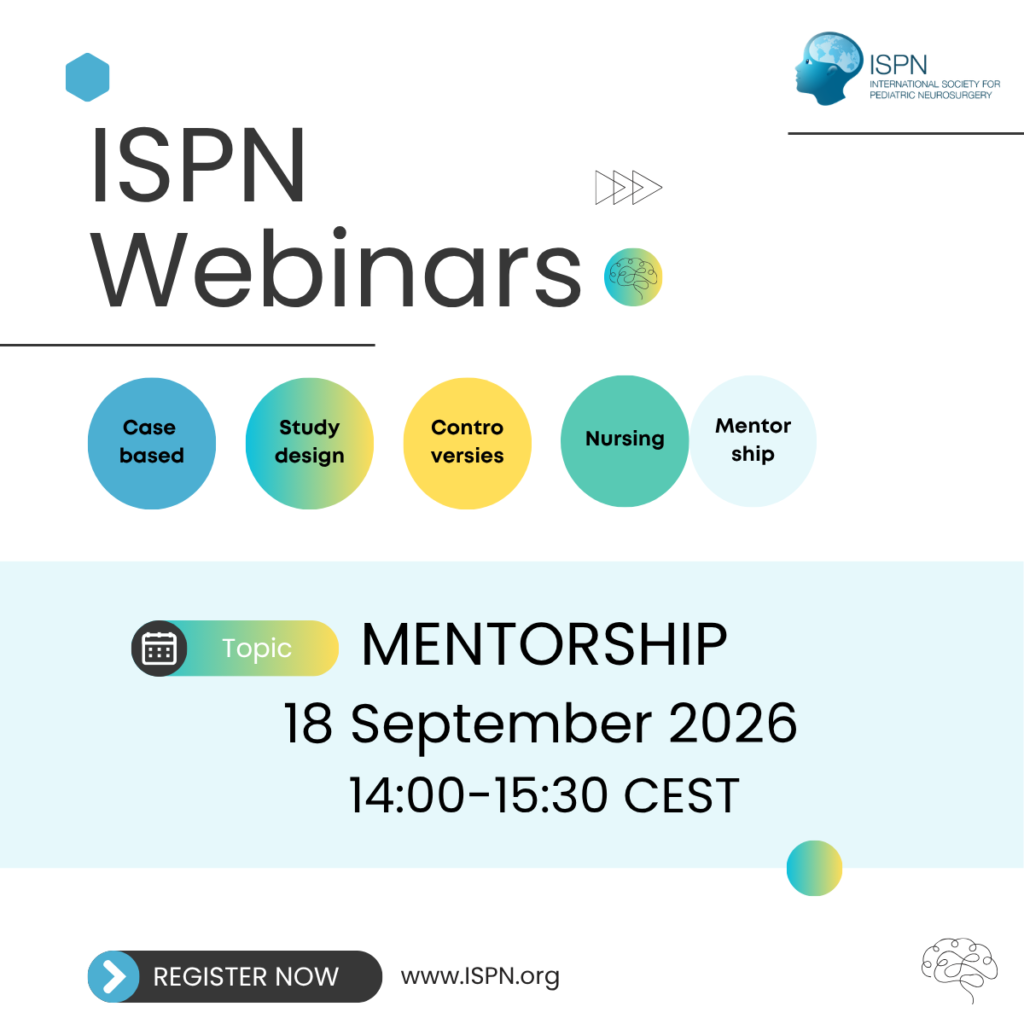
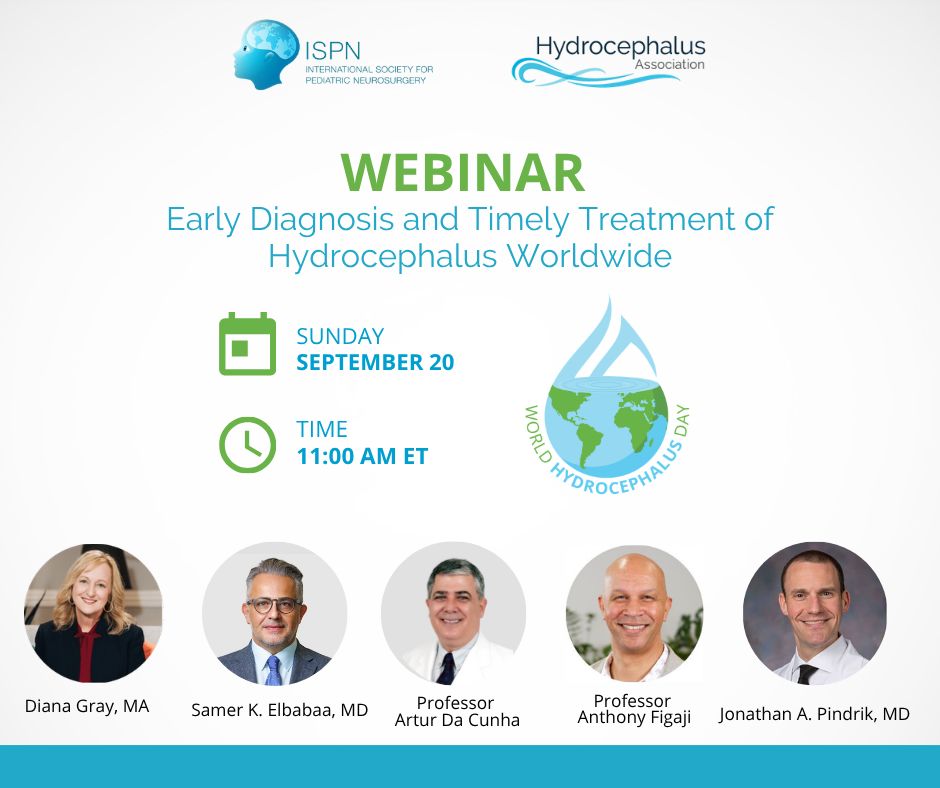
This year, the ISPN Education Committee and the ISPN Ad-hoc Neuro-oncology and Neurotrauma Committees will be launching two new online ISPN Education courses:
The ISPN High Impact Neurooncology Course and the ISPN Neurotrauma Course.
Both courses will consist of 4 online sessions and are aimed at neurosurgeons, medical students, residents and trainees with an interest in pediatric neurosurgery.
As these are official ISPN educational courses, note that registration will be for all sessions; and needs to be done prior to the start of the course. Once the course has started, you will no longer be able to sign up.
Participants will be entitled to receive a certificate of attendance upon completion of the course, however a 75% attendance rate will be required to obtain the certificate.
Note: AI assistants / recording will not be allowed during the sessions.
Online ISPN “High Impact” Neurooncology Course
We welcome you to this new ISPN online educational course of four sessions dedicated to neurooncology.
We are grateful to all the speakers from the international community who have agreed to contribute and we are certain that each two-hour session will provide an excellent forum for education and discussion.
We look forward to seeing you all there!
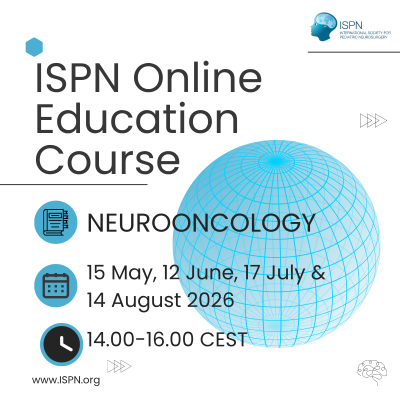
ISPN “High Impact” Neurooncology course schedule:
- 15 May: Brain tumor pathology, interdisciplinary care and brain tumor networks – Chairs: Todd Hankinson & Adriana Fonseca
- 12 June: Tumors of the posterior fossa – Chairs: Ulrich Thomale & Kristian Aquilina
- 17 July: Neuromonitoring, spinal cord tumors and high grade gliomas – Chairs: Shweta Kedia & Ernie Whan Kim
- 14 August: Suprasellar, pineal and neonatal tumors – Chairs: Mohammed El Beltagy & Adrian Caceres
Registration is now closed for the online ISPN “High impact” Neurooncology Course!
Registration was possible until the 2nd session of the series.
Online ISPN Neurotrauma Course
Our second new online educational course will be dedicated to Neurotrauma.
Taking place on 4 Wednesdays in July, this course is designed for professionals ready to deepen their skills, connect with global experts, and stay at the forefront of pediatric neurosurgery.
ISPN Neurotrauma course schedule:
- 1 July: Acute care & guidelines in acute TBI
- 8 July: Monitoring & complications in pediatric TBI
- 15 July: Mild TBI & non-accidental trauma
- 22 July: Spinal & nerve reconstruction
Course description
Module 1 - 1 July
Module 1: Acute Care & Guidelines in Pediatric TBI
Focuses on trauma stabilization via GCS assessment, airway management, and pediatric severe TBI updates. Covers DAI pathophysiology and the legal/ethical protocols for pediatric brain death certification.
- Assessment of an Unconcsious Child after trauma, Updates in Pediatric TBI Guidelines for Severe TBI – Gregory Hawryluk, United States
- Surgical Decision Making for Decompressive Craniectomy – M.S. Gopalkrishnan, India
- Diffuse axonal Injuries – Pathophysiology, Radiology and Management – Dhaval Shukla, India
- Brain Death Certification in Pediatric age group – When, Why and How – Thomas Nakagawa, United States
Module 2 - 8 July
Module 2: Monitoring & Complications in Pediatric TBI
Explores advanced neuromonitoring (PbtO2) and surgical management of hydrocephalus and growing skull fractures. Includes technical pearls for cranioplasty and intraspinal pressure analysis in cord injuries.
- Advanced Neuromonitoring in Pediatric TBI – Anthony Figaji, South Africa
- Growing skull Fractures – Deepak Gupta, India
- Subdural hygromas and Post Traumatic Hydrocephalus – What is known from the literature? G. Narenithiran, Singapore
- Cranioplasty after Decompressive Craniectomy – Challenges and Surgical Pearls – Corrado Iaccarino, Italy
Module 3 - 15 July
Module 3: Mild TBI and Non-accidental Trauma
Covers concussion management, identifying non-accidental trauma “triads,” and mastering CT/MRI protocols. Reviews non-invasive monitoring like optic nerve sheath diameter and transcranial Doppler.
- Mild TBI and Concussion – Management – Sharon Low, Singapore
- Non-invasive monitoring in Pediatric TBI – Llewellyn Padayachy, South Africa
- Non-Accidental Trauma – Eric Sribnick, United States
- Imaging in Pediatric Craniospinal trauma – Aaron McAllister, United States
Module 4 - 22 July
Module 4: Spinal & Nerve Reconstruction
Examines CVJ and subaxial spinal trauma surgery in children. Focuses on obstetrical brachial plexus evaluation and microsurgical reconstruction using nerve transfer techniques.
- Obstetrical Brachial Plexus Palsy – Clinical evaluation and planning – Ketan Desai , Mumbai, India
- Microsurgical Reconstruction – Deborah Garozzo, United Arab Emirates
- Embryogenesis and Surgical Planning in Pediatric CVJ injuries – Deepak Gupta, India
- Subaxial Cervical Spinal Trauma in Young Children – Sachin Borkar, India